


Voices
February 26 [2026]
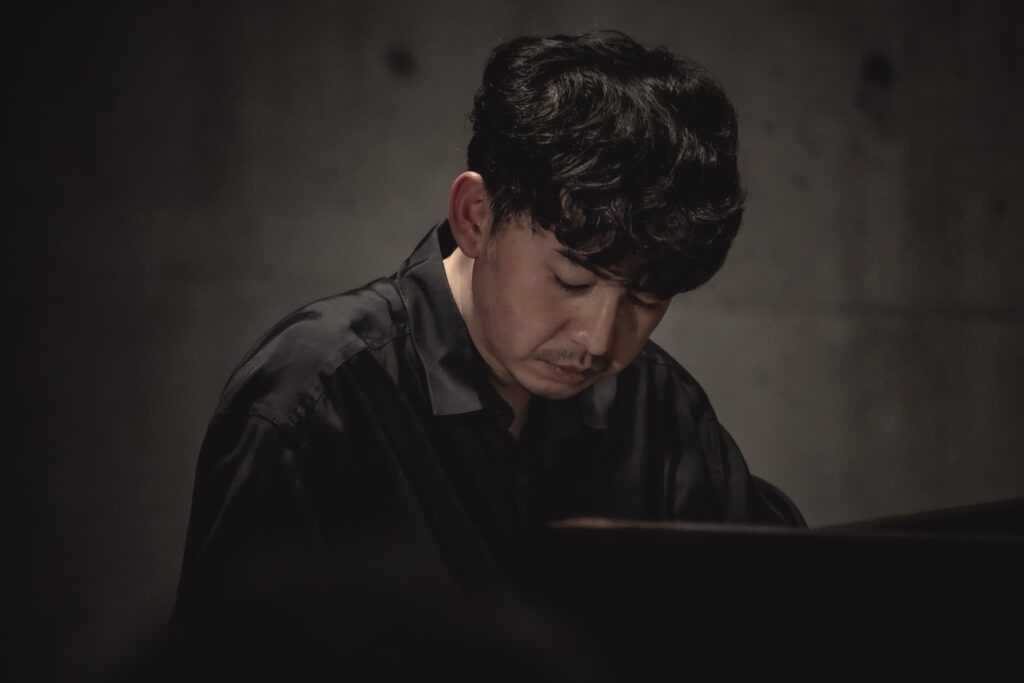
A Piano Whose Dignified Strength Resonates Through the Stillness The Origin of “Sound” Sought by the Rising Musician, Marihiko Hara.
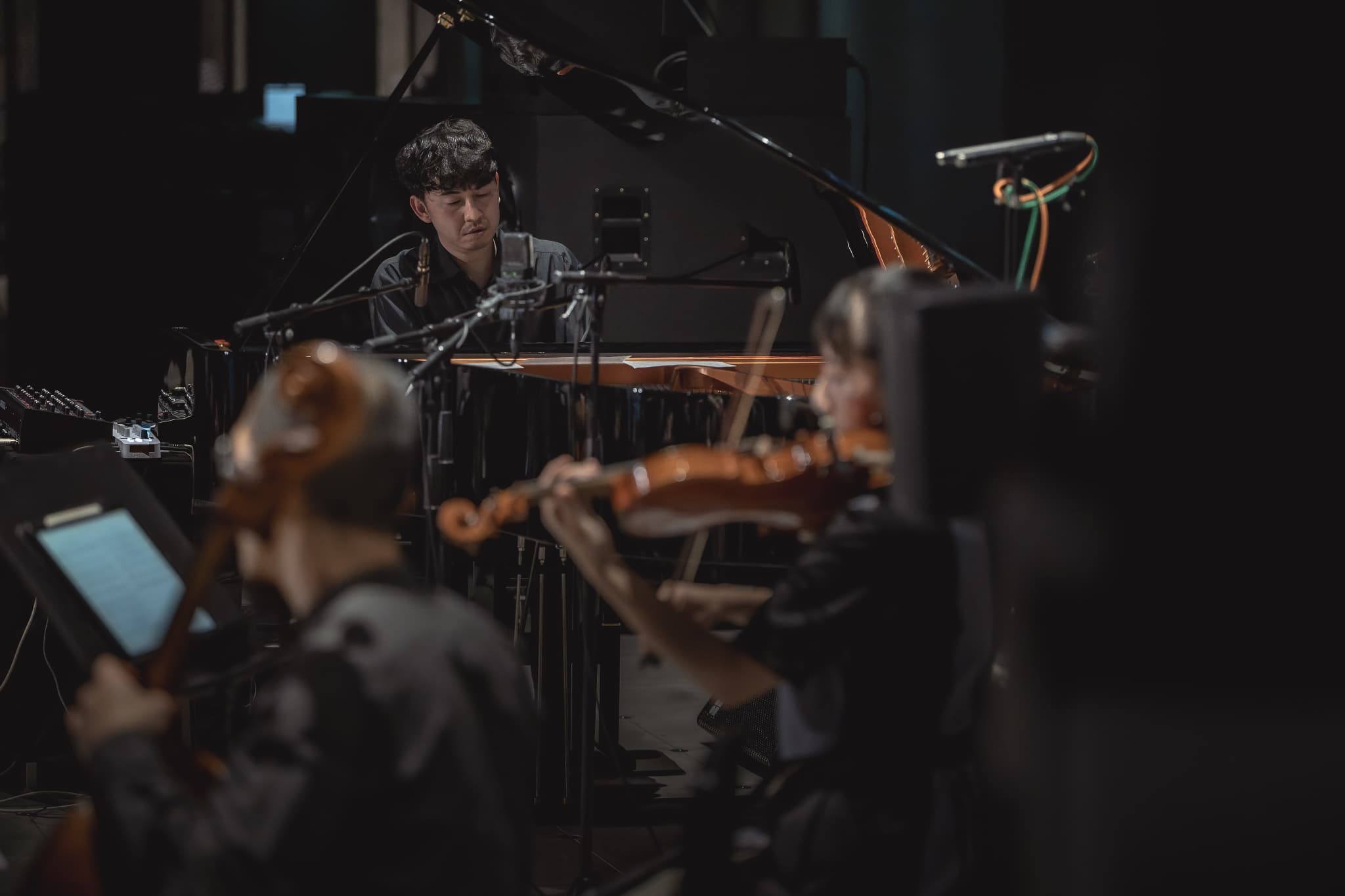
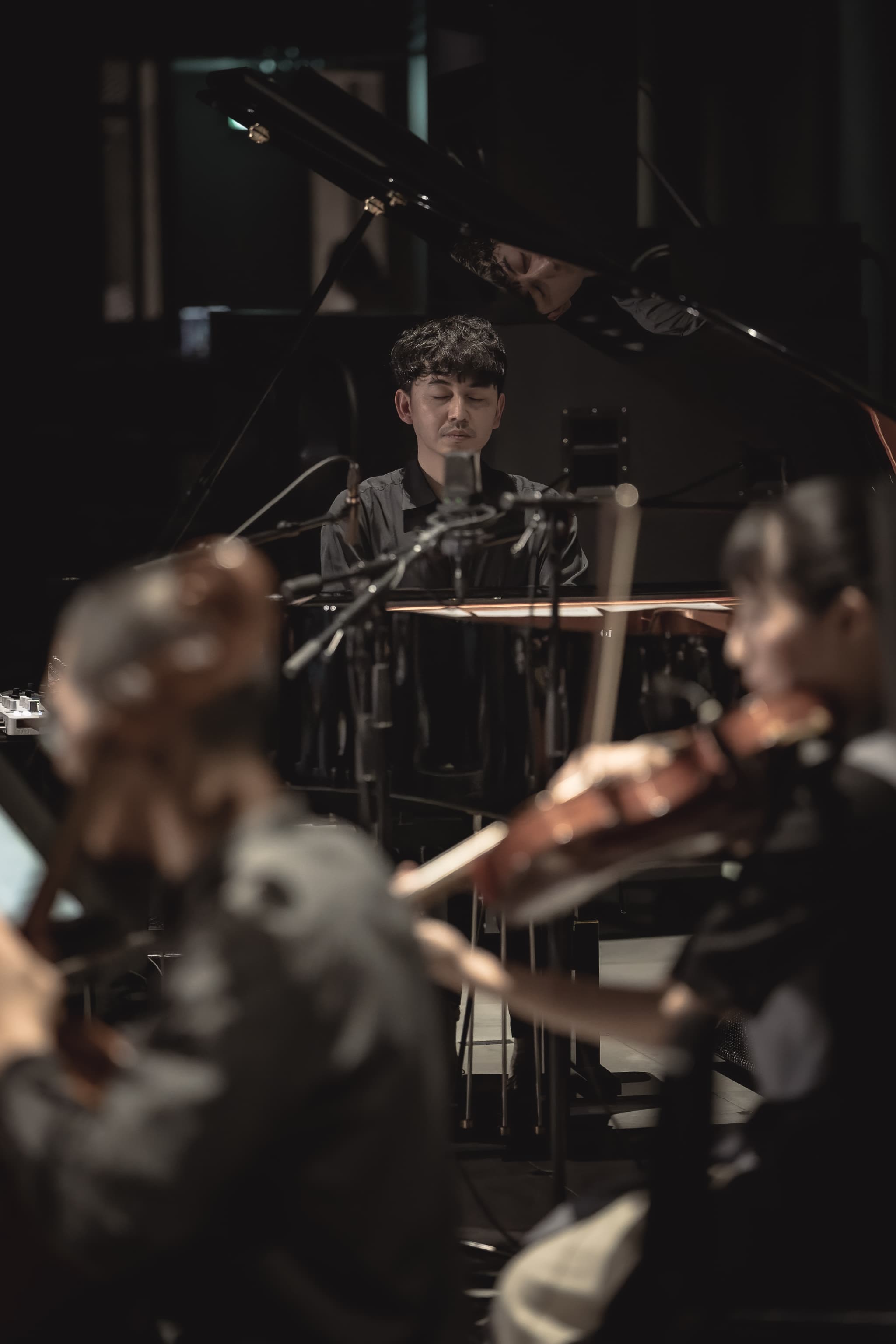
In addition to the 2025 film “Kokuho”, which swept numerous awards, Marihiko Hara has composed music for a variety of projects, from stage and television dramas to installations. Through his close relationship with Hiroyasu Sato, who oversees VS.’s sound system, a trio concert was realized at VS. in January 2026. On January 23rd, the day before the performance – with the sound engineering team thrilled by the exceptional audio quality – we sat down with him between the meticulous rehearsals and asked the darling of the era about the origins of his music, his approach to sound creation, and his future plans.
Becoming a “Musician” from a Non-Traditional Stance:
Two Triggers That Created an Impact
――To begin with, what was the turning point that led you toward the path of a musician?

When I was a child, I took classical piano lessons at a music school, but around the age of ten, it just did not feel right anymore. Looking back now, maybe I just was not suited for the environment of ‘learning at a music school.’ But around the time I started middle school, I found myself wanting to play the piano on my own terms.
The moment I truly set my sights on a career in music was when I saw Ryuichi Sakamoto’s ’1996 Trio World Tour’ in Osaka at age thirteen. At the time, I didn’t even know the word ‘musician’ – I just had a vague idea that I wanted to be a ‘composer.’ I had no clue how one actually becomes a composer, and I wondered what ‘learning composition’ even meant.
At one point I considered entering a music college, but I felt that “studying” music just wasn’t for me. It is not that I dislike theoretical aspects like chords or harmony. I feel there’s a difference between music you learn and music you can create yourself. Perhaps Mr. Sakamoto’s influence lay in that direction.
――You entered Kyoto University’s Faculty of Education and then advanced to graduate school. Why a field different from music?
This has always been consistent for me – I entered Kyoto University ultimately to become a musician. While Mr. Sakamoto graduated from Tokyo University of the Arts, I remember thinking at age 17, “If we ever meet in the future, perhaps someone not a junior from the same university could speak with him as an equal.”
The first time I actually got to greet him in person was at a secret concert at Hōnen-in Temple in Kyoto in 2005. Actually, back in high school, I submitted a demo tape to Mr. Sakamoto’s radio program audition. Unfortunately, I was never selected, but my younger brother (Rurihiko Hara, currently a researcher of Noh and Japanese gardens) was chosen several times. Perhaps because both our names were memorable, he remembered me even when we first met.
――When and in what context did you work with Mr. Sakamoto?
Having always been active in Kyoto, I was involved with the members of the artist group Dumb Type. That’s how I came to know Mr. Sakamoto – through Mr. Shiro Takatani, who was collaborating with Mr. Sakamoto on opera projects.
The first time Mr. Sakamoto and I performed together was on NHK-FM’s New Year’s Special in 2014. It was a project where four artists around 30 years old were selected for an impromptu session, and he chose me as one of them.
During the session, there was no prior discussion or preparation, and suddenly Mr. Sakamoto blasted out a tremendous, explosive sound – bang! – as if to ask, “Are you prepared for this?” It was this experience that ultimately led me to withdraw from the graduate school where I had been enrolled for many years.
――Did Mr. Sakamoto’s influence extend to Mr. Hara’s music from that point on?
People who’ve heard the music for this film, ‘Kokuho,’ also say they feel something like Mr. Sakamoto’s spirit in it. But when I listen closely myself, I realize the sound is completely different.
When I attended a rehearsal for Mr. Sakamoto’s concert, I once did a sound check on his piano. But I couldn’t get it to resonate. The keys felt heavy, and I could not produce the sound I had in mind. When I told him this, he just laughed and then played a piece for me. Watching him from the side, I had the impression that he was really using his body weight as he played. So even though I say that I’ve been influenced by Mr. Sakamoto, the sound of the piano is completely different.
――Any other musical influences, such as classical?
In middle school, I became deeply fascinated with Beethoven. At the time, there was a bit of a Beethoven boom, fueled by films like “Immortal Beloved.” Learning that Beethoven was the model for Jean-Christophe in Romain Rolland’s novel. I joined the Institute Romain Rolland’s reading group and even contributed to its journal. I was apparently the youngest member of the institute back in 1997. I was quite the precocious kid.
Among his works, I especially enjoyed listening to the piano sonatas and symphonies. For me, the three chords at the very beginning of the second movement of the “Appassionata” Sonata are irresistible. I wanted to connect sounds like that and kept searching for them, which might be the starting point of my journey as a musician.
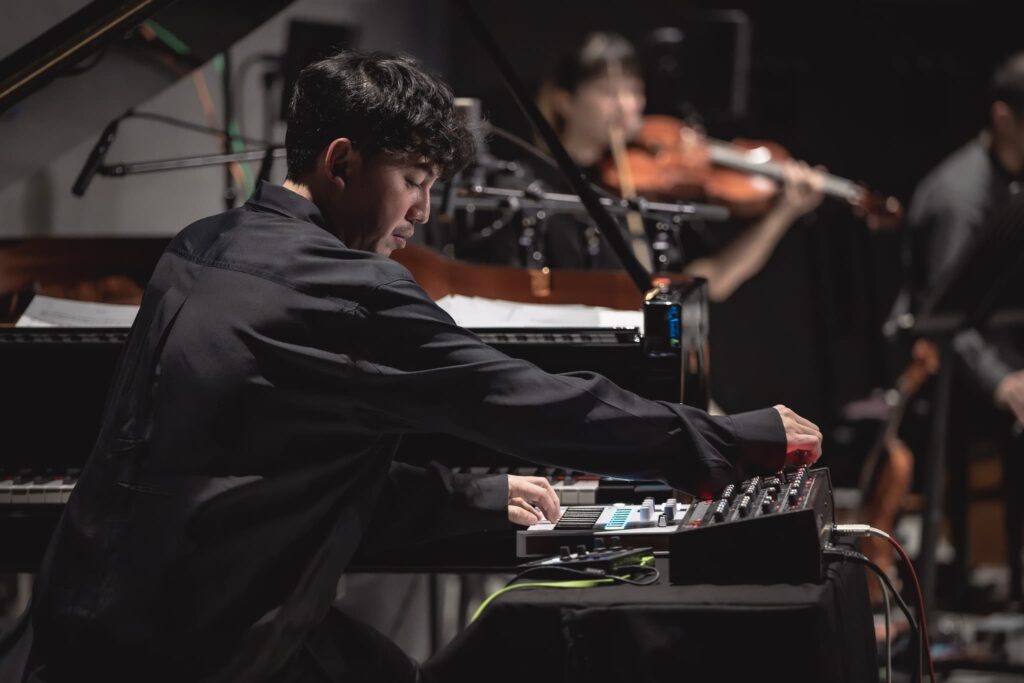
A concert is a space where music is “created anew.”
Trust in a trio that creates its own music
――What were your impressions of performing at VS.?
I really love this concrete space. Unlike a typical concert hall stage, you can perform on a flat surface that’s seamlessly connected to the audience. The way the sound reflects here is very close to the resonance I’m looking for. The speakers and the engineer are outstanding, and the acoustics – the very foundation – are already perfectly in place. Because of that, it really challenges us in how we choose to play. As a response, we adjust our sound to suit the space, sometimes even reducing it.
We rehearsed at the venue this time, but on the day of the performance, we will listen to the actual sound in the space and adjust freely – almost like a session. We will perform with the mindset of re-composing the music right there on the spot.
――You have been active mainly in Kyoto and the Kansai region for a long time. What are your thoughts on the music scene in Kyoto?
Kyoto has a strong electronic music scene, especially centered around CLUB METRO in Marutamachi. I have been going there since I was young, and it is also where I met the members of the Dumb Type. Jittoku and Takutaku are also great spots. In Osaka, I used to visit places like unagidani sunsui.
I live in Kyoto, but it is not that I am particularly attached to it. I have had offers from Tokyo that made me think about moving. However, I would rather not deal with the hassle of social obligations outside of music. Many of my seniors, like the members of Dumb Type, are based in Kyoto while working globally, so I figured I would stay here and give it a try. If I keep working hard, maybe they will come to see me instead.
――You have done a lot of work in film and media music, including ‘Kokuho’. When it comes to performing your own music, do you approach it differently?
Collaboration lets me bring out things I couldn’t achieve on my own and reach places I could not get to by myself. But I also enjoy making my own decisions and taking full responsibility. I hope to do both.
I have released solo albums before, but stage and film works always had a stronger pull on me. Now, I finally feel like I can settle down and really focus on my own music.
――This concert features a trio with violinist Anzu Suhara and cellist/viola da gamba player Tomoki Tai. Would you say this trio format is closer to the kind of music you wish to express?
During the COVID-19 pandemic in 2020, I studied orchestration, and since then I have started writing for large ensembles. Ms. Suhara and Mr. Tai joined me around that time, and over the past five years or so, they have become my partners in creating various media music and concerts together.
Working with them brings out a different sound than I could achieve alone, and the arrangements are not just mine either – we all contribute. We share the sheet music data, each of us arranges it, then we play it out and make adjustments.
It has been exactly 30 years since I was deeply moved by Mr. Sakamoto’s trio tour in 1996. At first, I hesitated, feeling like I might be imitating him with the same trio lineup, but now it comes naturally. This concert has a melodic setlist, but each member has a wide range of skills, allowing us to play more intense and edgy pieces as well. I hope we can adapt and perform various styles depending on the scene.
I am genuinely happy that people I have never connected with before are now listening to my music. I have also started getting collaboration offers from major artists. With boundaries between genres steadily breaking down these days, I am really looking forward to what comes next.
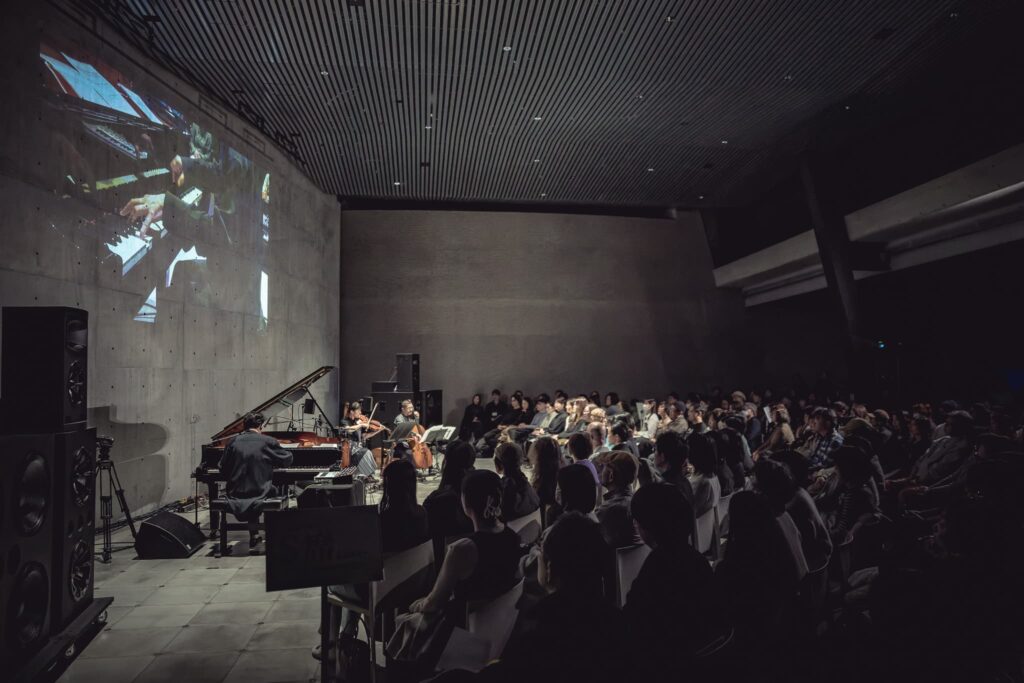
Photo by YOSHIKAZU INOUE